The Broward County Medical Examiner handles death investigations for cases involving sudden, unexplained, or traumatic deaths. Broward County death records linked to this office come from forensic reviews, autopsy findings, and official medical determinations. These records support accurate reporting of cause and manner of death across Broward County. The office plays a key role in examining deaths that fall under legal or medical scrutiny. Each case is reviewed using scientific methods and documented findings. These reports help clarify how and why a death occurred.
The Broward County Medical Examiner provides forensic services that include autopsies, toxicology testing, and detailed death investigations. Each case produces structured documentation that becomes part of official Broward County death records when medical or legal review is required. Autopsy reports outline physical findings, while investigation records explain the circumstances surrounding the death. Law enforcement agencies and legal professionals often rely on these documents for case evaluation and court processes.
What Is the Broward County Medical Examiner’s Office?
The Broward County Medical Examiner’s office is the official authority responsible for investigating unexplained, sudden, and medically significant deaths in Broward County. It determines the cause and manner of death through scientific and forensic evaluation. This office operates as part of the county’s death investigation authority, working with law enforcement, hospitals, and public agencies to complete legally required postmortem examinations.
Role of the Broward County Medical Examiner’s Office
The Broward County Medical Examiner’s office provides core forensic services for death cases that fall outside natural or expected medical conditions. Its staff includes forensic pathologists, investigators, and technical specialists who review medical evidence and scene findings. The office also operates within the broader county morgue system, where bodies are received, examined, and documented with strict procedural control.
Responsibilities include:
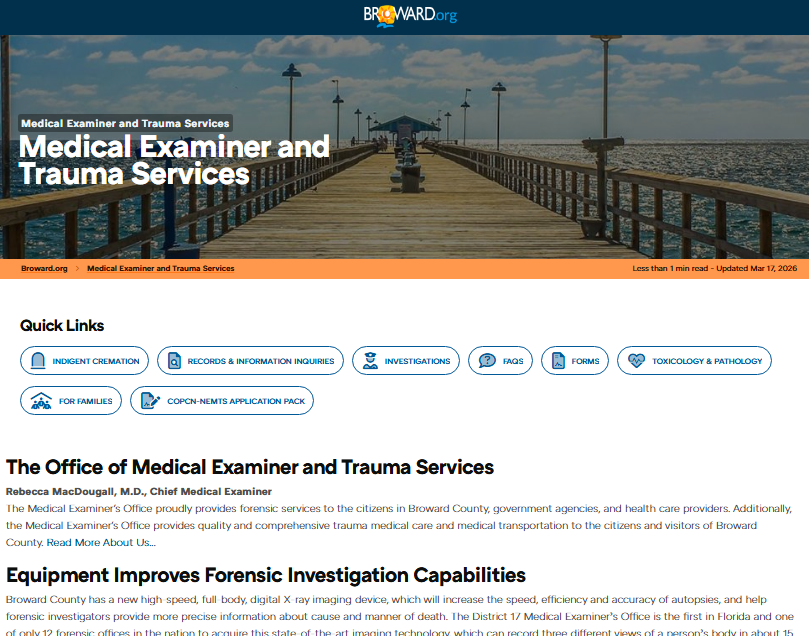
- https://www.broward.org/MedicalExaminer/Pages/Default.aspx
- Conducting autopsies for unclear or suspicious deaths
- Reviewing medical history and scene reports
- Identifying deceased individuals when identity is unknown
- Coordinating with police and public safety agencies
- Issuing official cause and manner of death reports
Each case is documented with medical, toxicology, and injury analysis. This process supports legal records and public health reporting.
Difference Between Death Records and Autopsy Reports
A death certificate records the official fact of death and the basic cause of death in Broward County. An autopsy report contains detailed medical findings created after a postmortem examination by the medical examiner. Both documents connect to Broward County death records, but they serve different legal and medical roles.
Death Certificate vs Autopsy Report
A death certificate is an official record issued after a person’s death is registered. It lists identity details, date, place, and a certified cause of death. In Broward County, it is processed through the Florida Department of Health in the Broward County Vital Statistics office. An autopsy report is prepared when a medical examiner investigates the body. It includes laboratory results, organ examination notes, toxicology findings, and final medical findings related to the cause of death documentation.
Differences:
- Death certificate confirms legal death registration
- Autopsy report explains medical findings in detail
- A death certificate is always issued; an autopsy report is case-based
- Autopsy supports investigations in unclear or sudden deaths
Who Issues What and How Records Are Viewed
Different agencies handle each record type in Broward County. The medical examiner focuses on postmortem analysis, while vital records manage official death registration.
| Record Type | Issued By | Access Level | Content Focus |
|---|---|---|---|
| Death Certificate | Florida Department of Health (Vital Stats) | Public with restrictions | Legal death facts |
| Autopsy Report | Broward County Medical Examiner | Restricted, case-based | Medical findings and examination results |
Death certificates are often available for family members and legal representatives. Autopsy reports may remain restricted when linked to active investigations or sensitive case details. In some cases, portions may be released after review.
How Death Investigations Work in Broward County
Death investigations in Broward County follow a structured process led by the Broward County Medical Examiner. Each case goes through forensic examination steps to determine the cause and manner of death. This process relies on scene review, medical evaluation, and toxicology testing to produce accurate findings.
Scene Response and Body Intake Process
Death investigations begin at the location where the event occurred. Investigators document conditions, collect physical evidence, and record environmental details. This stage supports later forensic examination work.
At the scene, the process may include:
- Photographing the location and body position
- Collecting trace evidence, such as fluids or fibers
- Interviewing first responders or witnesses
- Recording time of death indicators when possible
After scene work, the body is transported to the medical examiner’s facility. Intake staff log identification details, case numbers, and personal effects. A preliminary examination is completed to note visible injuries or medical conditions.
Autopsy Procedure, Toxicology Testing, and Case Report
Once intake is complete, the autopsy process begins inside the forensic examination unit. A pathologist performs a detailed internal and external examination of the body. This step helps determine injury patterns, disease presence, or trauma signs.
Steps in this stage include:
- External body examination and measurement
- Internal organ inspection
- Tissue sample collection
- Medical imaging, when required
Samples are then sent for toxicology testing. This analysis checks for alcohol, drugs, poisons, or chemical exposure that may relate to death. Toxicology results often take several days or weeks, depending on case complexity.
How to Request Broward County Death Records
Broward County death records can be requested through the official public records system maintained by the Broward County Medical Examiner. Requests are handled based on eligibility rules and document verification. Both online submission and offline channels are available for obtaining these records.
Who Can Request Broward County Death Records
Broward County death records fall under restricted public records, meaning not every record is open to all requesters. The Broward County Medical Examiner reviews each request to confirm eligibility before releasing any certified or informational copy.
Eligible requesters often include:
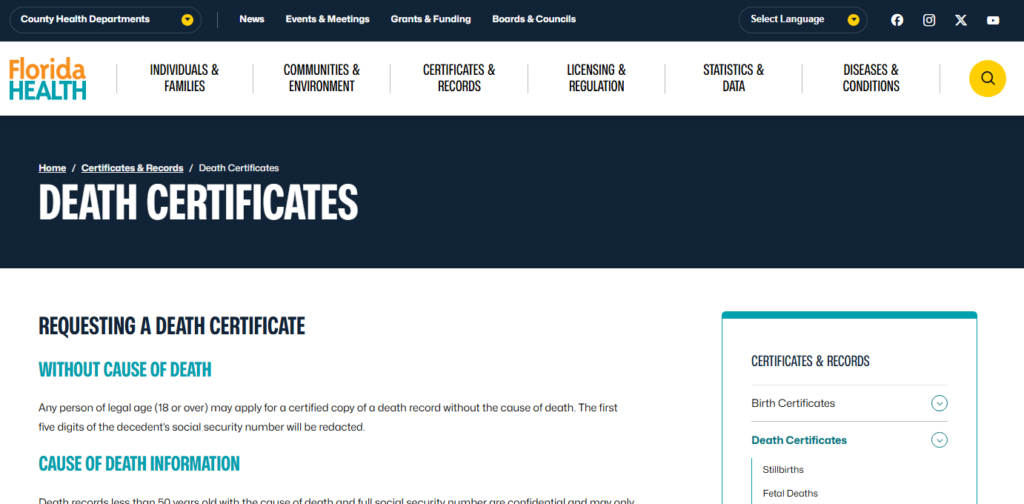
- https://www.floridahealth.gov/certificates-records/death-certificates/
- Immediate family members such as spouse, parent, child, or sibling
- Legal representatives with proper authorization documents
- Insurance companies handling active claims
- Government agencies conducting official investigations
- Individuals with a direct legal interest in the record
The record request process follows state-level public records rules, which balance privacy protection with lawful access. In some cases, older records may be available with fewer restrictions, depending on Florida public records laws. Proof of identity is commonly required during verification.
Required Documents, Submission Methods, and Processing Time
Each request for Broward County death records requires specific documents to confirm identity and eligibility. Missing paperwork often delays the record request process.
Required documents include:
- Government-issued photo ID (driver’s license or passport)
- Proof of relationship or legal authority (court order, authorization letter)
- Completed the request form from the Broward County public records system
- Payment for copy fees, if applicable
Requests can be submitted through multiple channels:
| Submission Method | Details |
|---|---|
| Online Request | Send completed forms and documents via the postal service |
| In-Person Request | Visit the Medical Examiner’s office during working hours |
| Mail Request | Send completed forms and documents via postal service |
Processing time varies based on record type and verification needs. Standard requests may take a few business days, while complex cases or older records can take longer. Expedited handling is not always available, depending on case workload and document availability within the Broward County death records archive.
Autopsy Reports – What Information They Contain
Autopsy reports in Broward County Medical Examiner records describe medical and forensic results from a postmortem examination. These documents list the cause of death, the manner of death, and supporting pathology details from the examination process.
Medical Findings in Autopsy Reports
Autopsy reports contain detailed observations from external and internal examination. Pathologists record injuries, organ conditions, and disease indicators found during the postmortem process. They document trauma patterns such as fractures, wounds, or internal bleeding. Organ review may show heart disease, infections, or other medical conditions present at the time of death. These findings form part of the final pathology report used in case review. Medical findings support the determination of the cause of death and classification of the manner of death, such as natural, accidental, suicide, or homicide.
Medical record elements often include:
- External examination notes, like scars, wounds, or marks
- Internal organ condition reports
- Injury mapping and trauma description
- Estimated time of death indicators
| Section | Content Type |
|---|---|
| External exam | Visible injuries, marks, physical condition |
| Internal exam | Organ health, bleeding, disease signs |
| Pathology notes | Disease presence, trauma analysis |
These sections create a structured record of forensic findings used in official review.
Toxicology and Death Classification Details
Toxicology results show the presence of drugs, alcohol, or toxins in body fluids and tissues. Laboratory testing identifies substances along with the concentration levels measured during analysis. These results connect with forensic findings in unclear cases. They may confirm overdose, poisoning, or a reaction between prescribed medications and other substances.
Toxicology elements include:
- Blood alcohol concentration levels
- Prescription medication detection
- Illicit drug screening
- Poison or chemical exposure results
The final manner of death classification is recorded as natural, accidental, suicide, homicide, or undetermined. The pathology report combines toxicology data with medical findings to form the official record used in Broward County Medical Examiner documentation.
When Medical Examiner Records Are NOT Public
Broward County Medical Examiner records are not always part of Broward County death records that the public can view. Certain files stay private when cases involve active investigations or legal limits on release. Restricted access applies when releasing details could affect case outcomes or violate privacy rules tied to sensitive deaths.
Active Investigations and Restricted Files
Records stay confidential when law enforcement or forensic teams are still working on a case. These situations often involve ongoing evidence review, witness statements, or pending legal action.
Examples include:
- Homicide or suspicious deaths under investigation
- Unidentified remains pending confirmation
- Cases with court involvement or subpoenas
- Evidence tied to criminal proceedings
In these cases, the Medical Examiner’s Office withholds reports, autopsy photos, and internal notes. Only basic confirmation of death may be released.
Fees, Processing Time & Availability
Fees for Broward County Medical Examiner records depend on the type of report requested and the format of delivery. Basic record requests cost less, while certified autopsy reports or full investigative files carry higher charges due to review and certification work.
Record Fees Breakdown
The Broward County Medical Examiner’s office applies different charges based on document type, copying effort, and certification needs. Older case files may also involve extra search work, which can slightly increase the total fee.
Typical fee range:
| Record Type | Estimated Fee |
|---|---|
| Basic case summary | $10 – $25 |
| Standard autopsy report copy | $25 – $75 |
| Certified copy of full record | $75 – $150 |
| Archived or complex file search | May exceed $150 |
Payments are usually accepted through approved methods such as money order, check, or electronic payment options, depending on the request channel.
Processing Time and Availability
Processing duration for Broward County Medical Examiner records depends on case status, backlog, and request volume. Standard requests are handled within a few business days, while older or complex files may take longer review periods.
Typical turnaround time:
| Request Type | Typical Time |
|---|---|
| Standard report copy | 3–7 business days |
| Certified records | 5–10 business days |
| Complex or archived cases | 2–4 weeks |
Availability depends on record classification and case sensitivity. Some records may require additional verification steps before release, which can extend official turnaround time.
FAQs About Broward County Death Records
Death records in Broward County are managed through official state and county systems, and requests often involve certified certificates and forensic documentation. Autopsy-related files are handled separately by the Broward County Medical Examiner based on eligibility and case status. Most requests for Broward County death records involve a formal record search process with identity and case details.
How to get an autopsy report?
Autopsy reports are released by the Broward County Medical Examiner after a formal request is submitted with required case information, such as name, date of death, and case number. Requesters usually complete a record search form and may need to show identification for verification. Fees can apply depending on copy type and certification needs. These reports often include forensic findings, cause of death, and examination details. Next of kin may receive priority in many cases.
Are death records public?
Most Broward County death records are considered public records under Florida law, which allows certified death certificates to be requested through official channels. Basic information, such as name, date of death, and cause of death, is generally available once records are finalized. However, certain parts, like autopsy images or detailed forensic reports, may remain restricted. Some requests may also require proof of relationship or legal purpose before release.
How long does processing take?
Processing time depends on the type of request and case complexity. Standard death certificate requests are often completed within a few business days to up to two weeks. Autopsy-related records from the medical examiner may take longer due to toxicology testing and case review. In some situations, full autopsy access reports are finalized within 2 to 8 weeks. Active investigations can extend processing timelines further.
Who can request death records in Broward County?
Requests for Broward County death records are usually open to the public for basic information like name and date of death. Certified copies often require proof of eligibility, such as a family relation or legal need. The Broward County Medical Examiner may also require identification when handling autopsy-related files or forensic reports. Third-party requests may face limits depending on the sensitivity of the case details. Fees and forms are part of the standard record search process.
What information is included in a death record?
A standard death record in Broward County contains key details such as full name, date of death, place of death, and certified cause of death. It may also include registration numbers and filing dates for official use. In cases involving autopsy, additional forensic reports may exist, but are not always part of the public copy. Sensitive medical or investigative notes are often kept separate from basic certificates.